One of the most promising areas of stem cell research involves transforming adult cells into embryonic stem-like cells. In a landmark study in 2006, Shinya Yamanaka and his colleagues at Kyoto University used genetic manipulation to turn mouse skin cells into induced pluripotent stem (iPS) cells – or artificially-created stem cells.
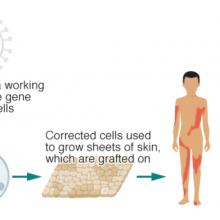
These iPS cells are almost indistinguishable from stem cells derived from embryos. In particular, they can make all other types of cell, a property known as pluripotency. iPS cells could allow doctors to use a patient’s own cells to study and treat diseases. This could reduce the risk of transplant rejection and end the controversial use of donated eggs or embryos.
We all begin from a cluster of pluripotent cells, but as we develop these cells quickly become specialised into tissues like blood, heart and brain. Yamanaka’s discovery makes it possible to reverse developmental time and convert adult cells back into the naïve state found in the early embryo.
However, this process still needs to be refined before medical use. Ultimately, this research could lead to a much greater understanding of the body and its diseases and potentially lead to treatments for a number of serious ailments, such as Parkinson’s, diabetes, heart disease, Alzheimer’s and cancer.
New research from the University of Cambridge
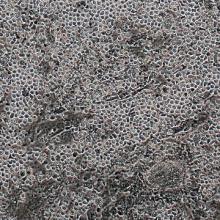
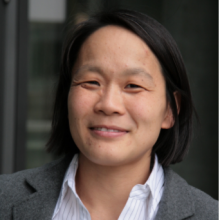
Building on Yamanaka’s research, scientists at the University of Cambridge have found a faster, more reliable and efficient method to transform adult cells into stem cells, bringing the prospect of patients being treated with their own or other adult cells a step closer.Jose Silva and his colleagues from the Wellcome Trust Centre for Stem Cell Research worked with the type of cells previously discarded by researchers because they didn’t transform fully into iPS cells. They found that these partly-converted stem cells could be converted fully by blocking the signal that begins differentiation in pluripotent cells. This speeds up and simplifies the process of generating iPS cells.
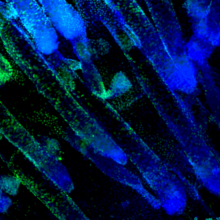
Silva discovered this by first trying to convert mouse brain stem cells into iPS cells. The cells changed quickly, but stopped transforming just short of becoming iPS cells. He found that these partly-converted cells could be converted into iPS cells by a chemical that blocks a specific signalling pathway.
The iPS cells are undamaged by the chemical and appear completely normal and fully pluripotent. Silva is now investigating how blocking one signalling pathway can have such a profound effect. The research team is also studying whether these results with mouse cells can be applied to human cells.
Publication details
Silva's work, supported by EuroSyStem, was published last month in PLoS Biology:
Silva J, Barrandon O, Nichols J, Kawaguchi J, Theunissen TW, et al.
(2008) Promotion of Reprogramming to Ground State Pluripotency by
Signal Inhibition. PLoS Biol 6(10): e253 doi:10.1371/journal.pbio.0060253
See also the PLoS Biology research synopsis, A Shortcut to Immortality: Rapid Reprogramming with Tissue Cells


interesting
interesting article
Kommentar hinzufügen