Stem cells that drive brain cancer

Embargoed until (GMT): 
4 Jun 2009 - 12:00pm UTC
Contact name: 
Emma Kemp
Organisation: 
EuroSyStem
Email: 
emma.kemp@ed.ac.uk
Telephone: 
+44 (0)131 651 7162

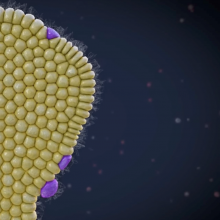
Scientists have developed an improved method for growing human brain cancer cells in the laboratory. The technique provides a powerful tool for studying how tumours form in the brain, and how treatments might be developed in the future. In a paper published in Cell Stem Celli, scientists from the Wellcome Trust Centre for Stem Cell Research at the University of Cambridge and the University of Toronto describe a technique for growing pure populations of the cancer stem cells that are thought to cause some of the most common and aggressive types of brain cancer, known as gliomas.

The researchers took samples of human brain tumours and used their technique to grow pure populations of tumour stem cells. They were able to maintain these cell populations indefinitely in the laboratory, through many generations of growth and replication. Further experiments demonstrated that cells grown in this way will regrow tumours in mice. The tumours they form in the mouse closely match those found in patients with brain cancer.

This close match between the laboratory model and the human disease provides an important opportunity for studying how brain cancers develop, and how they could be treated. The researchers have already begun to identify different kinds of glioma stem cell from individual tumours, perhaps helping to explain the range of gliomas seen in patients. A pilot experiment with a reference set of drugs highlighted how the cells can be used to look for potential new therapeutics.

The Cambridge and Toronto scientists used a technique known as adherent cell culturei to grow pure populations of glioma stem cells. In this approach, the cells are grown in a single layer on a flat surface. The technique improves on recent work from other labs which used a method called suspension culture. In these previous studies many of the cells died or differentiated into specialised cells. Also, since suspension culture generates aggregated clumps of cells, it is difficult to follow what happens to individual cells.

Neural cells and mouse brain: Glioma stem cells can form specialised cells of the brain. When transplanted into a mouse brain, they can form a tumour.Neural cells and mouse brain: Glioma stem cells can form specialised cells of the brain. When transplanted into a mouse brain, they can form a tumour. The adherent cell culture technique has several important advantages. Dr Steven Pollard, the first author of this study, says: “We can now consistently grow large, pure populations of brain tumour stem cells. These cell populations are extremely powerful for studying brain cancer. For example, we can monitor individual stem cells in real time and manipulate them in the laboratory to identify the genes and pathways controlling their behaviour.”

The next step will be to use GNS cells grown in the laboratory to study the different kinds of brain tumour and find out why some cells within a tumour remain as stem cells, while others become specialised. Pollard says:

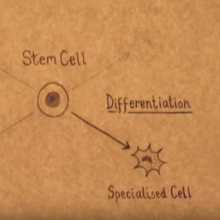
“Once the cancer-initiating stem cells have differentiated to form specialised cells, they lose their cancerous properties. We want to understand why, and whether we can target that process with drugs to help treat this devastating disease. We will make the glioma stem cells available to researchers worldwide and hopefully they will be a valuable resource.”

The research was funded by the Biotechnology and Biological Sciences Research Council, the Medical Research Council, the Wellcome Trust, Cancer Research UK, the Canadian Institutes for Health Research, the National Cancer Institute of Canada, Genome Canada and the Ontario Genomics Institute.

Pollard et al., Glioma Stem Cell Lines Expanded in Adherent Culture Have Tumor-Specific Phenotypes and Are Suitable for Chemical and Genetic Screens, Cell Stem Cell (2009): 10.1016/j.stem.2009.03.014