A growing set of downloadable, mix-and-match stem cell resources and activities suitable for a variety of educational settings. All components have been extensively tested, and come with full instructions.
Available in several European languages.
A growing set of downloadable, mix-and-match stem cell resources and activities suitable for a variety of educational settings. All components have been extensively tested, and come with full instructions.
Available in several European languages.
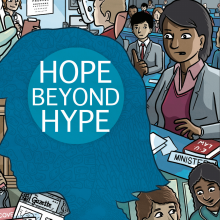
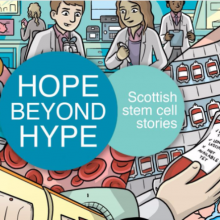
So starts an inventive 16 page graphic story that tells a story of stem cells from lab bench discoveries to working therapy. The graphic story, Hope Beyond Hype, grew from the desire of OptiStem, a large European consortium of stem cell researchers, to go beyond just explaining the science of stem cells. They wanted to depict the process they undertake as they try to move stem cell research on towards clinical trials and therapies.
This story, in comic book form, provides a realistic and accurate introduction to the complex process of developing best practice clinical stem cell-based treatments, in an interesting and engaging way.
Hope Beyond Hype can be viewed online and downloaded for free, with dynamic interactive and multilingual versions of the graphic story and a related board game coming soon.
We hope you enjoy ‘Hope Beyond Hype’: a story about stem cell therapies from science discovery to working therapy. Use the comment link below to leave your feedback or ask a question.

Before new treatments can reach patients, they must be tested in clinical trials. This is our second brief update on some stem-cell-related trials currently under way or recently approved.
This update looks at trials for amyotrophic lateral sclerosis (ALS) or motor neurone disease, as well as the latest news on how the trials we told you about in September are progressing. We’ve included details of one or two new trials for some of the conditions we focussed on last time: spinal injury, Stargardt’s macular dystrophy and stroke. We’ll post more updates on other themes in future, so tell us if there’s an area you really want to know about.
Over 100 Italian and UK scientists and politicians came together on 12th December for a Summit on Regenerative Medicine organized by the Italian Embassy in London and the School of Science Technology and Health, University Campus Suffolk. Their aim: to bring the collective expertise of academics, industry and the political world to bear on the question of how to take basic stem cell research towards the clinic.
Andrew Smith tweeted from a recent NeuroStemcell workshop on Stem cell therapy for neurological diseases: translation to the clinic. We've collated his tweets with links to some of the things discussed using Storify, to preserve a record of the workshop and for those who missed the original tweets.
Andrew Smith has been tweeting over at @euro_dayinsci from this week's NeuroStemcell workshop on Stem cell therapy for neurological diseases: translation to the clinic. He'll be tweeting again tomorrow, and even if you're not on Twitter it's worth checking out his updates for an overview of what's being discussed - some fascinating topics!
We've copied some of Andrew's tweets from today's sessions below. Visit and follow @euro_dayinsci for more...
Before new treatments can reach patients, they must be tested in clinical trials. This brief update details some stem-cell-related trials currently under way or recently approved.
We’ve focused on trials using embryonic stem cells or taking place in Europe, and cover spinal cord injury, Stargardt's macular dystrophy, age-related macular degeneration and stroke. We’ll post more updates on other themes in future, so tell us if there’s an area you really want to know about.
Un juego de rol que permite explorar los aspectos alrededor de la utilización de las células madre para una aplicación clínica. El escenario es una Audiencia Abierta al Público de un Comité de Ética de la Investigación,que decidirá si se aprueba un ensayo clínico que utilizará células madre embrionarias humanas para tratar lesiones de la médula espinal. Los participantes juegan el papel de los miembros del comité y de los diferentes actores principales presentes en la audiencia; esto permite que se comprometan en los debates sobre los aspectos científicos y sociales que rodean la investigación sobre células madre.