Thirteen years after the first report of human embryonic stem cells, what have we learnt about them and what hurdles still remain to be overcome?
It is 13 years since the first report of human embryonic stem (ES) cells. The enormous potential of these cells for medical applications was almost immediately clear: they might provide unlimited supplies of a wide variety of cell types for use in new therapies, drug screening, toxicology and disease modelling. But research gradually uncovered a number of challenges that must be overcome before that potential can be realised. So how far have we come? Many questions still remain, but substantial progress has been made: some clinical trials have started or are on the horizon, while good progress is being made in using these cells for toxicology and disease modelling.
The major hurdle to the development of embryonic stem cell (ES cell) applications comes precisely from the property that defines their great potential: their propensity to differentiate into specialized cell types of the body. To use this property in medical applications, it is crucial that we understand how to control the cells – both their proliferation (or multiplication) as undifferentiated stem cells, and their differentiation into particular specialized cell types among the myriad possibilities. In part, the problem has been addressed by the activities of international research consortia such as EuroStemCell and ESTOOLS (funded by the European Commission) and the International Stem Cell Initiative (ISCI; funded by the International Stem Cell Forum).
What IS a human embryonic stem cell?
We now have detailed knowledge of the molecules and genes that control self-renewal (cell copying) in mouse ES cells. This is a major achievement, but the properties of human ES cells differ significantly from those of mouse cells. A study by the ISCI looked in detail at the similarities and differences between mouse and human ES cells. Building on earlier work, the study helped to produce a consensus among researchers about how to identify and monitor undifferentiated human ES cells using ‘markers’ – genes or proteins that allow us to identify a cell as belonging to a particular type.
Other research showed that human ES cells need to be grown in quite different conditions from mouse ES cells in order to keep them undifferentiated. In fact, when the conditions that keep human ES cells undifferentiated are applied to mouse embryos, the result is a different kind of stem cell called an Epi stem cell (EpiSC). EpiSCs represent a later stage of development than embryonic stem cells and have different characteristics.

Scientists are now interested in finding the hypothetical missing type of human pluripotent stem cell – the ‘stage 1 pluripotent stem cells’ shown in the diagram, often referred to as ‘ground state stem cells’. Researchers are also working hard to fill important gaps in their knowledge about the early human embryo, and how it may differ from the mouse embryo. There is still significant uncertainty about precisely how the fate of human ES cells is controlled; what combination of genes, proteins or other molecules determines whether the cells self-renew or differentiate?
Tools for studying ES cells
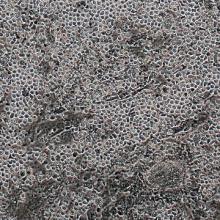
No bridge to cross by Elisa Närvä: Human embryonic stem cells grown on fibroblastsThe complex systems of molecules within and outside cells that control their behaviour are often referred to as regulatory pathways. Our ability to explore the regulatory pathways that control ES cell fate often hinges on the availability of well defined systems for growing (culturing) the cells in the lab. For a time, ES cells could only be grown using ‘feeder cells’, usually mouse skin cells, to provide substances the ES cells need to survive. Now, chemically defined culture media (essentially nutrient mixtures) are available that allow human ES cells to be cultured without using feeder cells. Research in the ESTOOLS consortium has particularly contributed to identifying defined substances to grow these cells on. These are important advances in the efforts to control how cells grow and develop.
If we want to analyse how ES cells are controlled in detail, and ultimately to be able to control and manipulate the cells for applications, it is also essential to develop tools for genetic manipulation. Again, work within the ESTOOLS consortium and elsewhere has advanced techniques for modifying the genes in human ES cells in ways that allow researchers to look at the effects of a genetic change and learn how the cells work. Exploiting these developments, ESTOOLS researchers have, for example, developed methods for differentiating human ES cells into neurons in a well defined way.
Understanding ES cell genetics
When ES cells are cultured over a long period of time, genetic changes can happen within the cells that appear to enhance their growth potential. These changes are not random, but more research is needed to understand the mechanisms that drive such ‘genetic instability’ and to determine its consequences. It is obviously desirable to avoid using cells that have undergone this kind of genetic change (termed variant cells) in regenerative medicine and other applications. Further research is necessary to devise ways for minimising their occurrence and for detecting them when they do occur. Nevertheless, the variant cells do offer tools not only for exploring the role of specific genes in ES cell biology but also for studying cancer, since many of the observed genetic changes mirror changes that happen in cancer. Research within ESTOOLS and also the ISCI has provided detailed characterisation of these changes and in some cases identified likely genes that are involved.
Human embyronic stem cell lines registered with the European Human Embryonic Stem Cell Registry
ES cell research in the reprogramming era
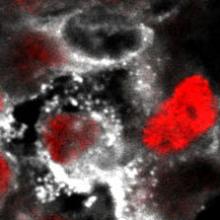
iPS cell colony by Daniela EversA substantial shift in the field came with the development of technology for reprogramming adult specialized cells into induced pluripotent (iPS) cells, first in the mouse in 2006 and soon after in humans in 2007. To some, this development alleviated their ethical concerns about using embryo-derived ES cells, something that was discussed in three international workshops organised by ESTOOLS, which also highlighted significant difficulties for international cooperation caused by differing rules about ES cell research in different European countries. However, iPS cells have their own ethical issues. Their pluripotency means that one day they could be used to create gametes (egg and sperm cells), and issues also arise in relation to the consent of donors to the many possible uses of cells made from their donated tissue sample.
Although, in principle, iPS cells could be used to produce all the cell types available from ES cells, and also offer the prospect of producing patient-specific cells to avoid immune rejection in regenerative medicine applications, the first methods of producing iPS cells involved some measure of genetic manipulation, which raises safety issues. Likewise, the process of reprogramming itself can generate mutations in the genes of the cells, as highlighted by recent studies in the ESTOOLS consortium. New methods that avoid genetic manipulation have now been reported, but it remains to be seen whether these minimise the appearance of genetic damage in the cells.
In the long run iPS cell technology offers major advantages for regenerative medicine, but it is likely that the initial clinical developments will employ ES cells. At this stage, researchers have more experience with ES cells. A number of ES cell lines have been produced to a clinical standard that address the safety concerns of clinical trial regulators. Nevertheless, iPS cells have opened up new possibilities for studying disease since they allow researchers to use a skin sample from a patient to grow unlimited numbers of cells with the genetic defects of their particular disease. Research within ESTOOLS contributed the development of this kind of study, although it is important to highlight that at least in one case, the study of a condition called fragile X syndrome, ES and iPS cells gave different insights into the nature of the early development of the disease. More research on both cell types is still needed.
Advancing towards the clinic
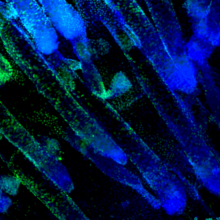
Rosette by Isabel Martin: Human embryonic stem cells differentiated toward neuronsIn the years since the human ES cells were first grown in the lab, there has been remarkable progress in research. Some developments were completely unexpected, for example the discovery that adding just a small number of genes to adult, specialised cells is sufficient to reprogramme them back into a pluripotent state like that of ES cells. Our understanding of ES cells and our ability to grow and control them have made significant steps forward, including the development of defined culture conditions for human ES cells, and the development of robust methods for driving their differentiation in particular directions.
The promise for a wide range of applications remains, but substantial basic research is still required before they can be realised. The development of specific chemicals as useful drugs typically takes the pharmaceutical industry 10 to 15 years, with a very high failure rate. Biological materials are undoubtedly much more complex: nearly 30 years separated the first description of proteins called monoclonal antibodies from their current application in clinical treatments for cancer.
Related articles
- Do we still need research on human embryonic stem cells?
- More on embyronic stem cells from EuroStemCell: expert commentary, fact sheets and educational resources
- UK National Clinical Human Embryonic Stem Cell Forum update on clinical grade ES cells (Dec 2011)
Acknowledgements
Map of human embryonic stem cell lines in Europe provided by hESCreg. Please note that this map shows cell lines that have been submitted to the registry and may not be a fully comprehensive representation of all lines in Europe.
iPS colony image by Daniela Evers from the Reconstructive Neurobiology, University of Bonn. All other stem cells from the exhibition Smile of a Stem Cell created by ESTOOLS.


Post new comment