Stem cells and disease research: challenges for iPS cells

Published: 
17 Oct 2011
By: 
Tilo Kunath

The discovery that adult cells could be ‘reprogrammed’ and converted into stem cells caused a great deal of excitement among scientists. There are high hopes that this new technology will help us study, understand and eventually treat disease. But researchers still face a number of challenges, as shown by several recent studies.


The birth of iPS cells
It could be argued that a new stem cell era was born on 10th August, 2006 when the world was introduced to induced pluripotent stem (iPS) cells by Kazutoshi Takahashi and Shinya Yamanaka [1]. This was not the first example of reprogramming of adult cells to make stem cells: nuclear cloning or fusion of adult cells with embryonic stem (ES) cells could already do the trick. However, it took the scientific community by surprise that as little as four proteins – the transcription factors Oct4, Sox2, Klf4, and Myc – could transform an adult cell into an embryonic one. This discovery lead to an explosion of work, with many labs around the globe confirming the original finding. Over 1700 papers have been published on iPS cells in the five years since they were discovered.

iPS cell research: the teenage years
Since the discovery of iPS cells, research has uncovered a number of challenges for their use. A variety of different methods are used to generate iPS cells, but the process remains highly inefficient [2]. Only a small percentage of adult cells, usually less than 0.1%, will become iPS cells in an experiment. The reason for the very low success rate is not fully understood, but is an area of intense research. For now, most experiments start with a few hundred thousand, or perhaps one million adult cells. This is enough to provide a substantial number of iPS ‘cell lines’ – cells grown in the lab from the same starting cell through many cycles of growth and division over many generations of cells. Are all the successfully reprogrammed iPS cells the same? We are now beginning to appreciate that different iPS cell lines made from adult cells belonging to the same individual may not necessarily have the same properties. So skin cells taken from a single patient can be used to make a number of iPS cell lines, but these cell lines are not identical.

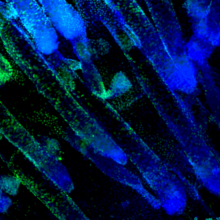
Not all iPS cells are equal: iPS cells made from the same individual vary in their ability to make neurons, despite passing standard stem cell testsNot all iPS cells are equal: iPS cells made from the same individual vary in their ability to make neurons, despite passing standard stem cell tests

This line-to-line variability will have a significant impact on the design and interpretation of experiments to investigate diseases using iPS cells. To illustrate this with an example, I will use our studies on iPS cells to model an aggressive form of genetic Parkinson’s disease [3].

iPS cells and Parkinson’s disease
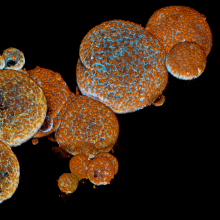
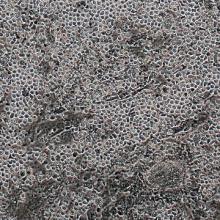
Colony of iPS cells grown from human skinColony of iPS cells grown from human skiniPS cells give us the opportunity to investigate disease in the lab in a new way, by allowing us to grow unlimited numbers of cells from a tiny sample taken from a patient with a particular disease.  Through a collaboration with Professor John Hardy (University College London), we obtained cells called fibroblasts from the skin of a mother and her daughter. The mother had early-onset Parkinson’s disease with dementia, caused by a genetic problem. She had extra copies of a gene that carries the code for a protein called alpha-synuclein, which is involved in most forms of Parkinson’s disease. Her daughter, in her early 20s, did not inherit this genetic mutation and is not expected to get Parkinson’s. We were interested in comparing the cells from the two women to try to understand more about how the disease works.

Dr. Michael Devine, a visiting clinician PhD student, and I proceeded to reprogram both the mother’s and daughter’s skin fibroblasts using the original iPS cell method from Prof Shinya Yamanaka. We made 30 independent iPS cell lines from the patient (the mother), and 10 iPS cell lines from her daughter. The next step was to investigate the stem cell properties of the iPS cells. We put all 40 cell lines through a battery of tests to check they had been properly reprogrammed and functioned as stem cells. Any iPS cell lines that did not pass were excluded from further analysis.

We next looked at the ability of ‘good’ iPS cell lines to make brain cells called neurons in the lab. Neurons are the type of cells that go wrong in Parkinson’s disease. When we compared different iPS cell lines from the same individual, for example by looking at only the iPS cell lines from the mother, we found significant variability in the ability of different iPS cell lines to turn (differentiate) into neurons. This was despite the fact that the cells performed equally well in the stem cell ‘tests’. This should not have surprised us. We knew from other experiments that separate stem cell lines produced in the lab from the same genetic strain of mouse, for example, can have vastly different properties. In fact, several studies have shown that the reprogramming process itself is quite violent and can lead to changes in the DNA of the resulting iPS cells. Many iPS techniques also use viruses as part of the reprogramming process, and this means DNA from the viruses end up on chromosomes in the iPS cells.

"The issue of variability between cell lines has serious implications for modeling diseases with iPS cells"

Facing the challenges
Taken together, the issue of variability between cell lines has serious implications for modeling diseases with iPS cells. If we are comparing one iPS cell line from a genetic Parkinson’s patient with one ‘control’ (or ‘healthy’) iPS cell line and we observe some interesting defects in the patient’s cells, how can we be sure the problem is due to the Parkinson’s disease mutation and not to some other source of variability between cell lines? This is a difficult question that is being addressed in several ways. The most straight-forward solution is to investigate multiple iPS cell lines per individual, and to compare iPS cells from several patients with those from several unaffected individuals. A true disease-related defect should be present in all ‘disease’ iPS cell lines and absent from all ‘healthy’ iPS cell lines.

Often the iPS cells themselves are not being compared, but their differentiated derivatives. For example, we might compare neurons grown from Parkinson’s and non-Parkinson’s iPS cells. Since the differentiation process can also be subject to variability, it is important to ensure that cell cultures are at a similar stage in their development when experiments are performed, otherwise we run the risk of comparing apples to oranges. Poorly designed studies that do not take into account the possibility of line-to-line variation run the risk of incorrectly interpreting the features of a disease. In our study, we did find an overall difference between the neurons made from the mother’s iPS cells and those made from the daughter when we carefully controlled for possible sources of variation. We are now studying this further to try to understand more about the disease and use the cells for drug screening.

In some cases it is not possible to obtain samples from a second or third patient for logistic reasons or because of the rarity of a disease. Recent work has provided an elegant solution to this problem. Jaenisch and colleagues have been able to ‘repair’ a rare Parkinson’s mutation in iPS cells [4]. They have made new, repaired iPS cell lines that perfectly match ‘healthy’ iPS cells and can be compared to the diseased cells. An alternative is to start with a healthy iPS cell line and induce a precise genetic mutation that is known to cause a particular disease. This will also provide well-matched cell lines to perform comparative experiments to study the disease.

Growing up: the future of iPS cell research
The discovery of iPS cells has led to an explosion of work in many disease fields. The initial excitement dampened slightly when many of the caveats were revealed. However, the technology is developing at a rapid pace and many of the initial hurdles have already been overcome, for example by the development of safer or more efficient methods for making iPS cells. The remaining obstacles to using iPS cells for studying diseases, particularly those that involve subtle defects, are also beginning to fall. Careful experimental design, appreciation of the inherent variability of iPS cell lines, and recent genetic engineering advances will go a long way to bringing this field to maturity. Only then will we be in a position to realize the full potential of iPS cells as a tool for understanding and tackling disease.

Related links

References (Journal subscriptions may be required)
[1] Takahashi, K. & Yamanaka, S. Induction of pluripotent stem cells from mouse embryonic and adult fibroblast cultures by defined factors. Cell 126, 663-676 (2006); doi:10.1016/j.cell.2006.07.024
[2] O'Malley, J., Woltjen, K. & Kaji, K. New strategies to generate induced pluripotent stem cells. Curr Opin Biotechnol 20, 516-521 (2009); doi:10.1016/j.copbio.2009.09.005
[3] Devine, M. J., Ryten, M., Vodicka, P., Thomson, A. J., et al. Parkinson's disease induced pluripotent stem cells with triplication of the α-synuclein locus. Nat Commun 2, 440 (2011); doi: 10.1038/ncomms1453
[4] Soldner, F., Laganière, J., Cheng, A. W., Hockemeyer, D., et al. Generation of isogenic pluripotent stem cells differing exclusively at two early onset Parkinson point mutations. Cell 146, 318-331 (2011); doi: 10.1016/j.cell.2011.06.019


Post new comment

The content of this field is kept private and will not be shown publicly.
  • Web page addresses and e-mail addresses turn into links automatically.
  • Allowed HTML tags: <a> <em> <strong> <cite> <code> <ul> <ol> <li> <dl> <dt> <dd> <p>

More information about formatting options