A growing set of downloadable, mix-and-match stem cell resources and activities suitable for a variety of educational settings. All components have been extensively tested, and come with full instructions.
Available in several European languages.
A growing set of downloadable, mix-and-match stem cell resources and activities suitable for a variety of educational settings. All components have been extensively tested, and come with full instructions.
Available in several European languages.

A specialist discussion event regarding the revision of the EU Clinical Trials Directive (CTD) was held at the European Parliament Information Office in London on the 22nd of February 2013. This event was initiated by EuroStemCell and OptiStem in collaboration with the European Parliament Office in London and featured OptiStem Principal Investigator, Prof Michele De Luca as a panellist. Read on for a description of the event from Georgina Massouraki and a storify summary of lots of interesting event tweets, put together by Corin Campbell.
This is part 3 of REMEDI scientist Mikey Creane's guest blog for EuroStemCell. Read Mikey's other posts.
Stem cells are a powerful technology with the potential to revolutionize medicine. They have provided scientists with ways of studying human biology and disease that weren't possible before. A question I get asked regularly by my family and friends is “when can you give me some of your stem cells?” or “how long do you predict before they will be readily in use…?”
The goal of this case study is to expose students to the basics of embryonic stem cells, their therapeutic uses, and the controversy surrounding embryonic stem cells through the story of a college student, Jim Allison, who becomes paralyzed after a car accident. Jim is approached by a team of doctors to participate in a study where patients are injected with embryonic stem cells in the hopes that these cells will regenerate damaged nerve cells. The case follows Jim and his family as they grapple with the decision of participating in a study that leads to the destruction of embryos.
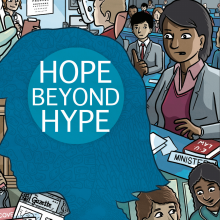
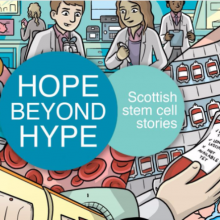
So starts an inventive 16 page graphic story that tells a story of stem cells from lab bench discoveries to working therapy. The graphic story, Hope Beyond Hype, grew from the desire of OptiStem, a large European consortium of stem cell researchers, to go beyond just explaining the science of stem cells. They wanted to depict the process they undertake as they try to move stem cell research on towards clinical trials and therapies.
This story, in comic book form, provides a realistic and accurate introduction to the complex process of developing best practice clinical stem cell-based treatments, in an interesting and engaging way.
Hope Beyond Hype can be viewed online and downloaded for free, with dynamic interactive and multilingual versions of the graphic story and a related board game coming soon.
We hope you enjoy ‘Hope Beyond Hype’: a story about stem cell therapies from science discovery to working therapy. Use the comment link below to leave your feedback or ask a question.

Before new treatments can reach patients, they must be tested in clinical trials. This is our second brief update on some stem-cell-related trials currently under way or recently approved.
This update looks at trials for amyotrophic lateral sclerosis (ALS) or motor neurone disease, as well as the latest news on how the trials we told you about in September are progressing. We’ve included details of one or two new trials for some of the conditions we focussed on last time: spinal injury, Stargardt’s macular dystrophy and stroke. We’ll post more updates on other themes in future, so tell us if there’s an area you really want to know about.
Over 100 Italian and UK scientists and politicians came together on 12th December for a Summit on Regenerative Medicine organized by the Italian Embassy in London and the School of Science Technology and Health, University Campus Suffolk. Their aim: to bring the collective expertise of academics, industry and the political world to bear on the question of how to take basic stem cell research towards the clinic.