Scientists from the Pierre & Marie Curie University in Paris have discovered a previously unknown type of muscle stem cell. These cells, dubbed "PICs", appear to be as important for muscle regeneration and repair as satellite cells – the “stemlike” cells involved in the normal growth of muscle and regeneration following disease or injury. As such, PICs may have implications for treatment of muscle diseases like muscular dystrophies.
Satellite cells, first discovered in the 1960s, are resident muscle stem cells, responsible for repair and maintenance of skeletal muscles. Usually dormant, they become active when a muscle fiber is damaged, producing new muscle cells as well as replacement satellite cells to maintain reserves. In diseases like muscular dystrophies, the process becomes less efficient, and satellite cells cannot keep up with the increasing muscle degeneration.
This new study, published recently in Nature Cell Biology, identifies another population of muscle-resident stem cells - one with perhaps greater regenerative potential. When researchers injected purified PICs into injured leg muscles of mice, they found the PICs comparable to satellite cells in their ability to form muscle fibers. The PICs also generated many more PICs, making skeletal muscle more like other self-renewing tissues, such as skin, than was previously thought.
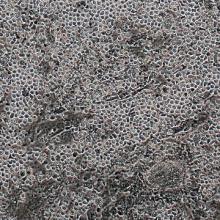
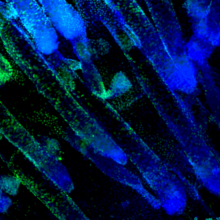
PICs - PW1-expressing interstitial cells - shown marked in greenThese novel muscle stem cells get their name from the fact that they express a gene involved in cellular responses to injury, called PW1, and are located in the area between the muscle fibers (interstitial), previously thought to merely contain connective tissue. Hence PICs - PW1 expressing interstitial cells.
Drs. Marazzi and Sassoon, the senior authors of this research, are also involved in two EU-funded (FP7) research projects that explore the role of muscle stem cells as therapeutic tools (OptiStem) and as targets (Endostem) for regenerative medicine. The identification of a new and significant population of muscle stem cells widens the scope of muscle regeneration biology. Work in progress suggests that PICs are primary targets not only in muscle growth but also in muscle atrophy and wasting (cachexia).


Invia nuovo commento