Building the foundations for human embryonic stem cell research

Published: 
14 Dec 2010
This summary covers: 
Aug 2006 - Jul 2010

About ESTOOLS

The ESTOOLS project aimed to develop the tools and knowledge required for application of human embryonic stem (ES) cells in industry and medicine. It was the largest consortium of researchers studying human ES cells in Europe. The project teamed up 21 research groups, bringing together more than 150 scientists in 10 countries. It was the first EU-funded project focused entirely on human embryonic stem cells.

After the discovery of human induced pluripotent stem (iPS) cells by Shinya Yamanaka and James Thomson in 2007, the ESTOOLS consortium also added a new program to its research, specifically aimed at studying iPS cells.

Unravelling the fate of stem cells

At any moment, a stem cell can take two different routes:

  1. It can split into two identical daughter stem cells (self-renewal).
  2. It can turn into a mature cell that will eventually form tissues or organs of the body (differentiation).

A significant part of ESTOOLS’ work involved investigating how human ES cells choose between these two alternative fates.  Among other things, we identified a number of genetic and chemical factors that control the fate of these cells.

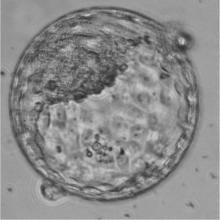
Jewellery Master Piece by Michael Peitz: Embryonic stem cell colonyJewellery Master Piece by Michael Peitz: Embryonic stem cell colony

Unlimited supplies of ES cells

ESTOOLS researchers used their findings about cell fate to develop new methods for growing unlimited numbers of human ES cells in the laboratory. These methods avoid contaminants that could make the cells unsuitable for use in regenerative medicine. The consortium also improved methods for genetically modifying human ES cells. This is crucial for many applications of ES and iPS cells, for example in drug discovery and toxicology, or for establishing disease models in the laboratory. Such research is essential if we are to exploit the many opportunities offered by ES and iPS cells for developing new approaches to human healthcare.

Checking the genome

Before lab-grown cells are used in industrial or medical applications, researchers must check for unwanted genetic changes in the cells. Such genetic changes are often associated with cancer, and therefore may pose a danger for patients. ESTOOLS researchers obtained unprecedented insights into this process of genetic change, known as culture adaptation. We identified many of the changes that occur in the genome of human ES cells. This will help scientists select and use ES cells that are less prone to genetic mutations in future.

Neuron bursting by Jie Na: Neural differentiation from human embryonic stem cells. Part of Smile of a Stem Cell Exhibition.Neuron bursting by Jie Na: Neural differentiation from human embryonic stem cells. Part of Smile of a Stem Cell Exhibition.

Making neurons, modelling disease

One possible application of human ES cells could be as a source of neurons to treat patients with damage to their nervous system. ESTOOLS researchers delved into the mechanisms by which human ES cells differentiate into neural cells, identifying key factors involved in the process. We established new and improved methods for transforming human ES and iPS cells into neurons and glia (the supporting cells in the nervous system). These methods will open new opportunities for studying and treating neurodegenerative disorders.

Induced pluripotent stem cells

In the pioneering field of human iPS cells, ESTOOLS developed a collective expertise that is essentially unique in Europe. Among other achievements, we produced lines of iPS cells from patients affected by Huntington’s disease, Fragile X syndrome and spinal cerebellar ataxia. These cells provide invaluable laboratory models for severe neurodegenerative diseases that would be difficult or impossible to study in patients.

Science and society

From the beginning, ESTOOLS realised that science, ethics and dialogue with the public should be integrated with its scientific work. We both pursued ethical research and promoted successful initiatives for public discussion about human ES cells. This included activities such as T.E.L.E.S.C.O.P.E. events for schools and the theatre play Staminalia., which we hope may continue to serve as models for public dissemination of science .

Looking to the future

More than 125 scientific publications have arisen from ESTOOLSʼ work, many in top specialist journals. Overall, the project has generated a critical mass of expertise in human ES and iPS cells in Europe. Its work provides a bedrock for therapeutic and industrial applications. Future projects will build on these foundations and will begin to tackle some of the new questions uncovered by ESTOOLS research.

Acknowledgements

Report by Sergio Pistoi, ESTOOLS public information officer

Project details
project logo
Project name: 
ESTOOLS - Platforms for biomedical discovery with human embryonic stem cells
Aim: 
To develop the tools and knowledge that are needed for the industrial and medical applications of human ES and iPS cells
Duration: 
Aug 2006 - Jul 2010
Number of partners: 
21
Countries represented: 
Czech Republic, Finland, Germany, Italy, Israel, Netherlands, Spain, Sweden, Switzerland, UK
Funding source: 
EU FP6